
Travel: BATH. UK, Sept. 16 - 17/2024
Updated: Jan 27
A continuation of a trip which started on Sept 10th
Bloody road diversions (like in the previous post) were our fate, when driving also on the way from Portsmouth to Beth. That added at least another hour and a half to our driving passing South Hampton and Salisbury.


The charming historic town of Bath, which we only visited it , once in the 1990th, is situated in the South West England in the valley of the River Avon,
I remember being smitten by its beautiful architecture, already 40 years ago, to have promised myself to return..
Well it took that long.. to make it back..
From its legendary beginnings around a thermal spring with waters that healed a swineherd prince to a magnificent Georgian playground that catered to both aristocracy and commoners alike, Bath has endured for over 2,000 years as a leisure and wellness destination.

Pulteney Bridge over the River Avon was designed by Robert Adam in a Palladian style, and completed by 1774, connecting the city with land in Bathwick which the Pulteney family wished to develop.
It is named after Frances Pulteney, wife of Sir William Pultney. who was a wealthy Scottish lawyer and Member of Parliament (MP).
it is one of only four bridges in the world to have shops across its full span on both sides.

Free Walking Tours
Right by the entrance to the Roman Bath
at town's center, local informed volunteers who revere their city , offer free 2 hours guided walking tours,
which we thoroughly enjoyed and highly recommend

Aquae Sulis: The Waters of Sul, the Roman name for the city

The city was founded in the 1st c AD by the Romans who used the natural hot springs as a thermal spa.

Beth coat of arms includes a depiction of the city wall, and two silver stripes representing the River Avon and the hot springs. The sword of St. Paul is a link to Bath Abbey. The supporters, a lion and a bear, stand on a bed of acorns, a link to Bladud, the subject of the Legend of Bath. The knight's helmet indicates a municipality and the crown is that of King Edgar (referencing his coronation at the Abbey).
The Arms bear the motto "Aqvae Svlis", the Roman name for Bath in Latin script;
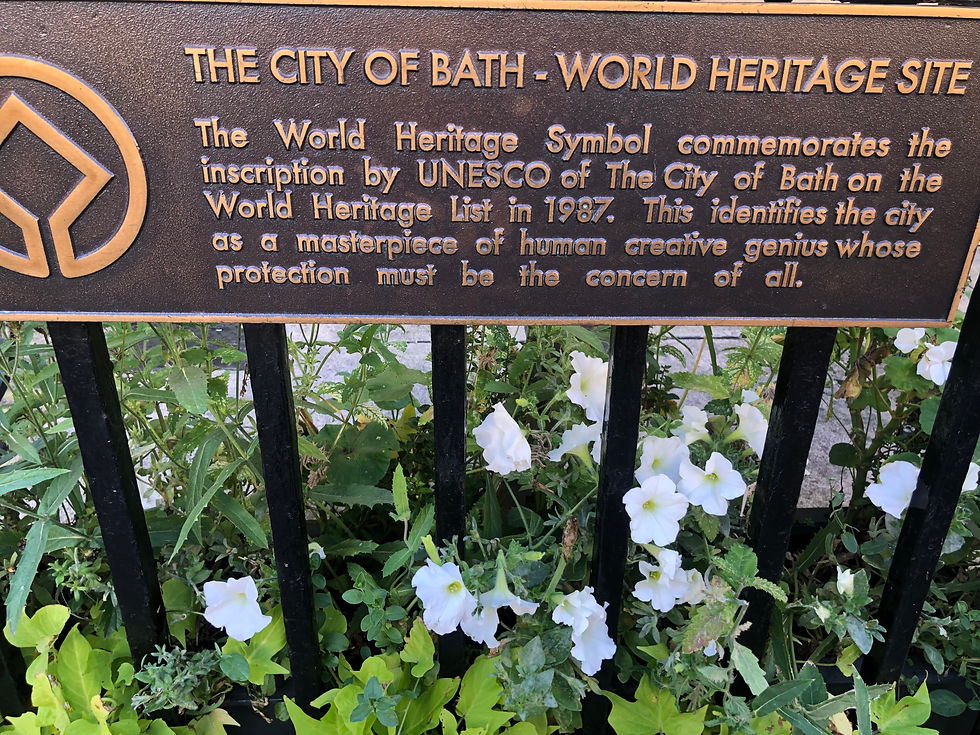
Bath - a UNESCO World Heritage Site. since 1987 is the only city in the UK with that distinction known for and named after its Roman-built baths.


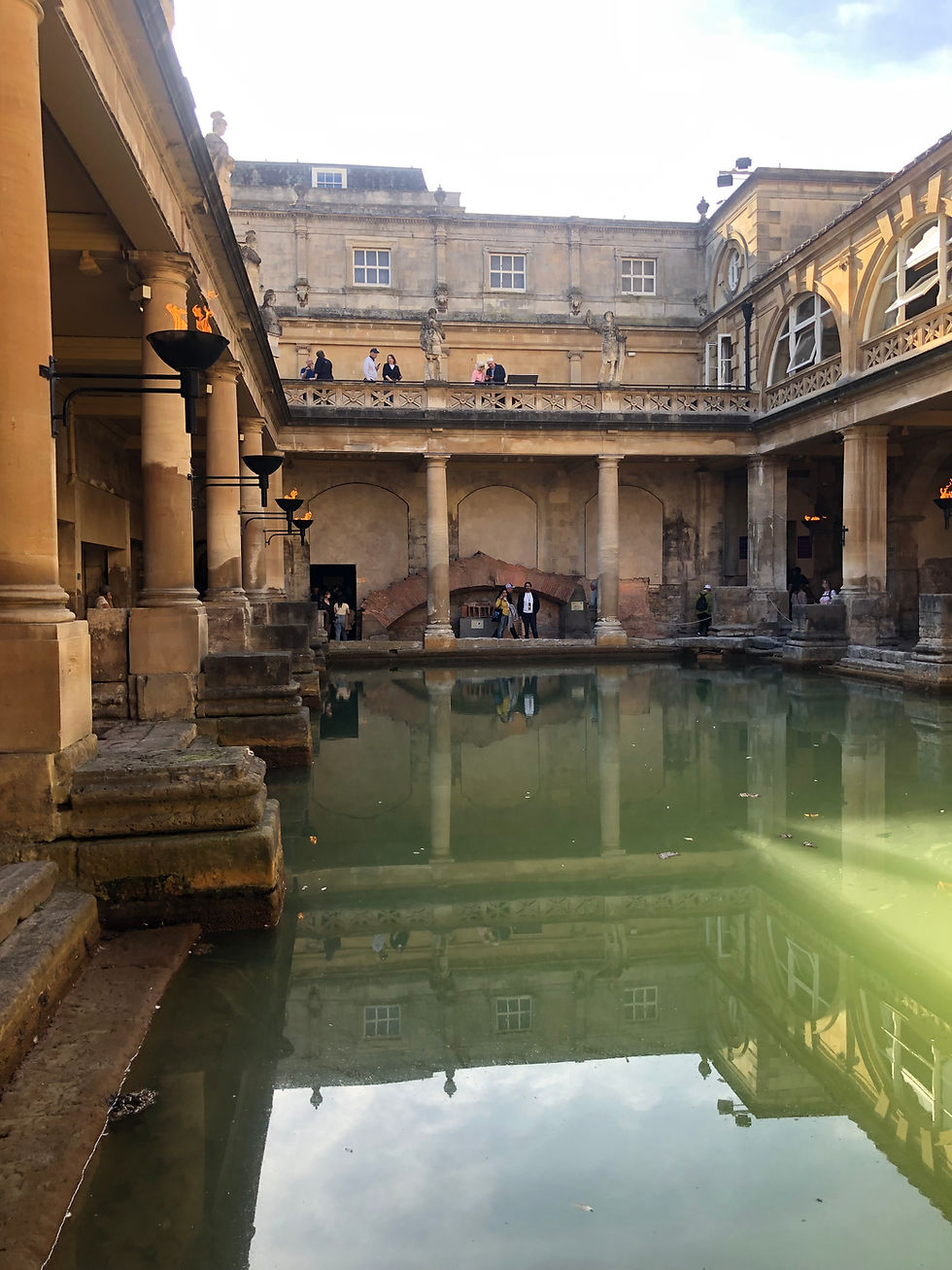
The Roman remains, especially the Temple of Sulis Minerva and the baths complex based around the hot springs at the heart of the Roman town of Aquae Sulis, have remained at the heart of the City’s development ever since.

In AD 43, the Romans started the development of Aquae Sulis as a sanctuary of rest and relaxation, not a garrison town like most Roman settlements.
The remains are amongst the most famous and important Roman remains north of the Alps, and marked the beginning of Bath’s history as a spa town.
The city became a spa with the Latin name Aquae Sulis at. 60 AD when the Romans built baths and a temple in the valley of the River Avon, although hot springs were known even before then A temple was constructed in AD 60–70, and a bathing complex was built up over the next 300 years
Head of the goddess Minerva, Spring Over Flow The "Gorgon head"
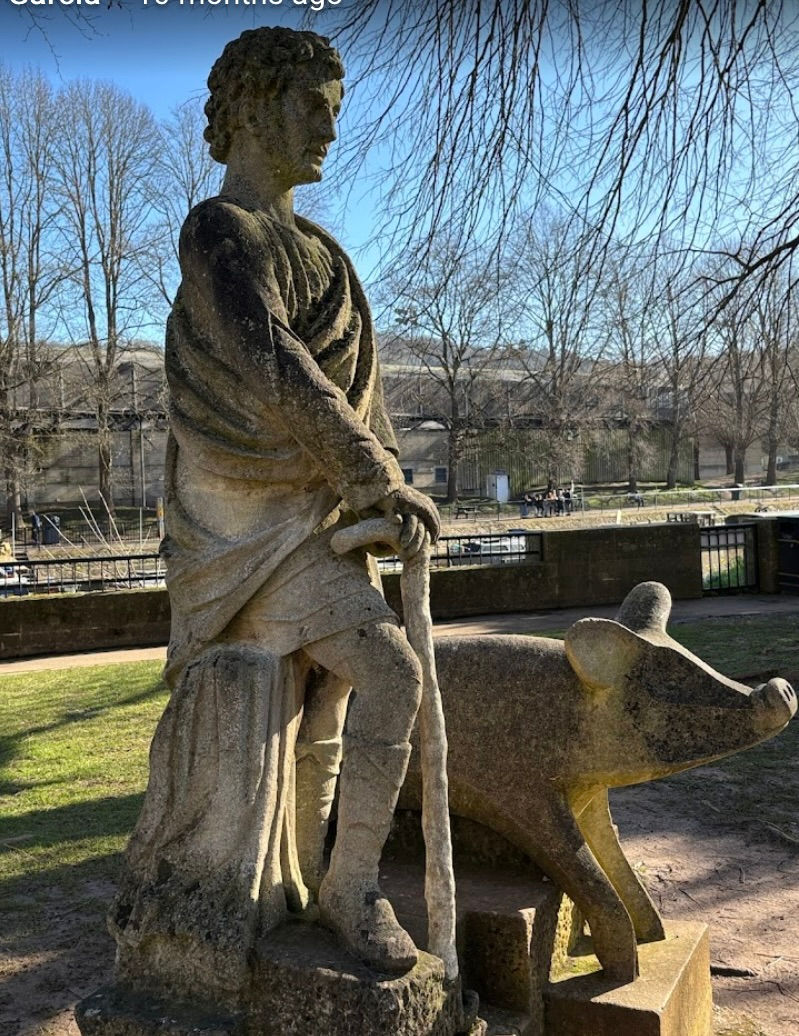
According to legend, Prince Bladud was cured of leprosy after bathing in the hot muddy waters. In gratitude, he founded the city of Bath around the springs in 863 BC. The story of the Prince and the Pig is an intriguing rags-to-riches account of the life of the young prince who journeyed to Athens to study. During his time in Greece, he unfortunately fell ill with leprosy. On his return, he escaped to the countryside, where he was able to make a simple living as a swineherd.
Bladud proceeded to become the ninth King of the Britons, and supposed father of King Lear.

in the Middle Ages Bath became an important center for the wool industry but in the 18th c under the reigns of George l, ll and III, it developed into an elegant spa city, one of the most fashionable places to live in, with neoclassical Palladian buildings, which blend harmoniously with the Roman baths,
Georgian era. Georgian architecture, crafted from Bath stone, includes the Royal Crescent, Circus, Pump Room, and the Assembly Rooms, where Beau Nash presided over the city's social life from 1705 until his death in 1761.
Bath has over 6 million yearly visitors, making it one of ten English cities visited most by overseas tourists.[


Other attractions in addition ton many shops, restaurants. include , Bath Abbey, (7th c) the many spas, canal boat tours, Parade Gardens and Royal Victoria Park which hosts carnivals and seasonal cultural events. among which the Jane Austen Center, is one of the best known

Jane Austen center/Festival
Bath became famed in literature and art. The famed author Jane Austen even called it home for a few years, thus in her honer a Festival takes place annually, from Friday 13 Sept. to Sunday 22 Sept. this year, which we witness It is the largest and longest running Jane Austen Festival in the world.

The great 19th c writer (1775-1817,)
published four timeless novels during her lifetime: Sense and Sensibility (1811), Pride and Prejudice (1813), Mansfield Park (1814), and Emma (1815). In these and in Persuasion and Northanger Abbey giving vivid depictions of English middle-class life during the early 19th c
All her work was made into very popular movies
The festival begun with Regency Costumed Promenade, which fills the streets of Bath with over 500 people in Regency dress.
Of the 3 men generally held to have been responsible for the city of Bath’s sensational 18th C development—Ralph Allen, Beau Nash and John Wood the Elder—Allen is arguably the most remarkable.

Richard Beau Nash House -Event organizer
Nash (1674 – 1762) was a Welsh lawyer who as a dandy, socialite played a leading role in 18th-century British fashion. He is best remembered as the master of ceremonies at the spa town of Bath,He played a leading role in making Bath the most fashionable resort in 18th-century England. had extensive influence in the city until early 1761, including regulating gambling.

He lived in a house on Saw Close (now at the main entrance to the Theatre Royal), and kept a string of mistresses.
Nash was a notorious gambler who was forced[citation needed] to move in with his mistress, Juliana Popjoy, because of his debts

Ralph Allen Post system
Allen, (1693 – 1764) a British postmaster, merchant and philanthropist best known for his reforms to Britain's postal system
In 1726 he bought the stone quarries at Combe Down, and built an ingenious railway to carry the huge blocks down the Bath, where the building renaissance, inspired by the genius of John Wood the Elder, was just beginning.
work in the municipal post office, becoming its postmaster by 1712. Allen made the system more efficient and took over contracts for the British mail service to cover areas of England up to the Anglo-Scottish border and into South Wales.
By 1731, he held a monopoly over the quarries and set to increase the output of Bath stone. By 1744 he owned the entire area and, with architect John Wood, had planned and put into effect a complete rebuilding of Bath using Bath stone, the best source of which was on Combe Down
The distinctive honey-colored Bath stone, used to build the Georgian city,
Allen had the Palladian mansion of Prior Park built (1742) on a hill overlooking the city
Allen was a warm-hearted philanthropist contributing generously to many worthy causes.
He gave money and the stone for the building of the Mineral Water Hospital in central Bath 1738. Book Builder of Bath

John wood the older architect . Trained with Paladium
Wood developed his unique architectural ideas and refined his architectural beliefs and by his mid-twenties had combined his passion for Palladianism (a type of classical architecture) with his obsession with Ancient British history, and almost certainly Freemasonry.
Wood is known for designing many of the streets and buildings of Bath,
At Queen Square, Wood introduced speculative building to Bath
Wood is known for designing many of the streets and buildings of Bath,
Established in 1738 and opened in 1742,

His notable work in Bath included: St John's Hospital, Queen Square, Prior Park, The Royal Mineral Water Hospital, the North and South Parades and The Circus.
The healing powers of the bath were one of the reasons for the foundation of also St John's Hospital, Bath around 1180, by Bishop Reginald Fitz Jocelin, which is among the oldest almshouses in England
Royal National Hospital Beggars of Bath St John's Hospital
Thermal Bath
There’s definitely something in the water here in Bath. Archaeological evidence suggests that there was human activity around the hot springs on which Bath is built as far back as 8000 BC. Same mineral-rich thermal springs that soothed the Romans 2,000 years ago at Thermae Bath Spa, can also be enjoyed today
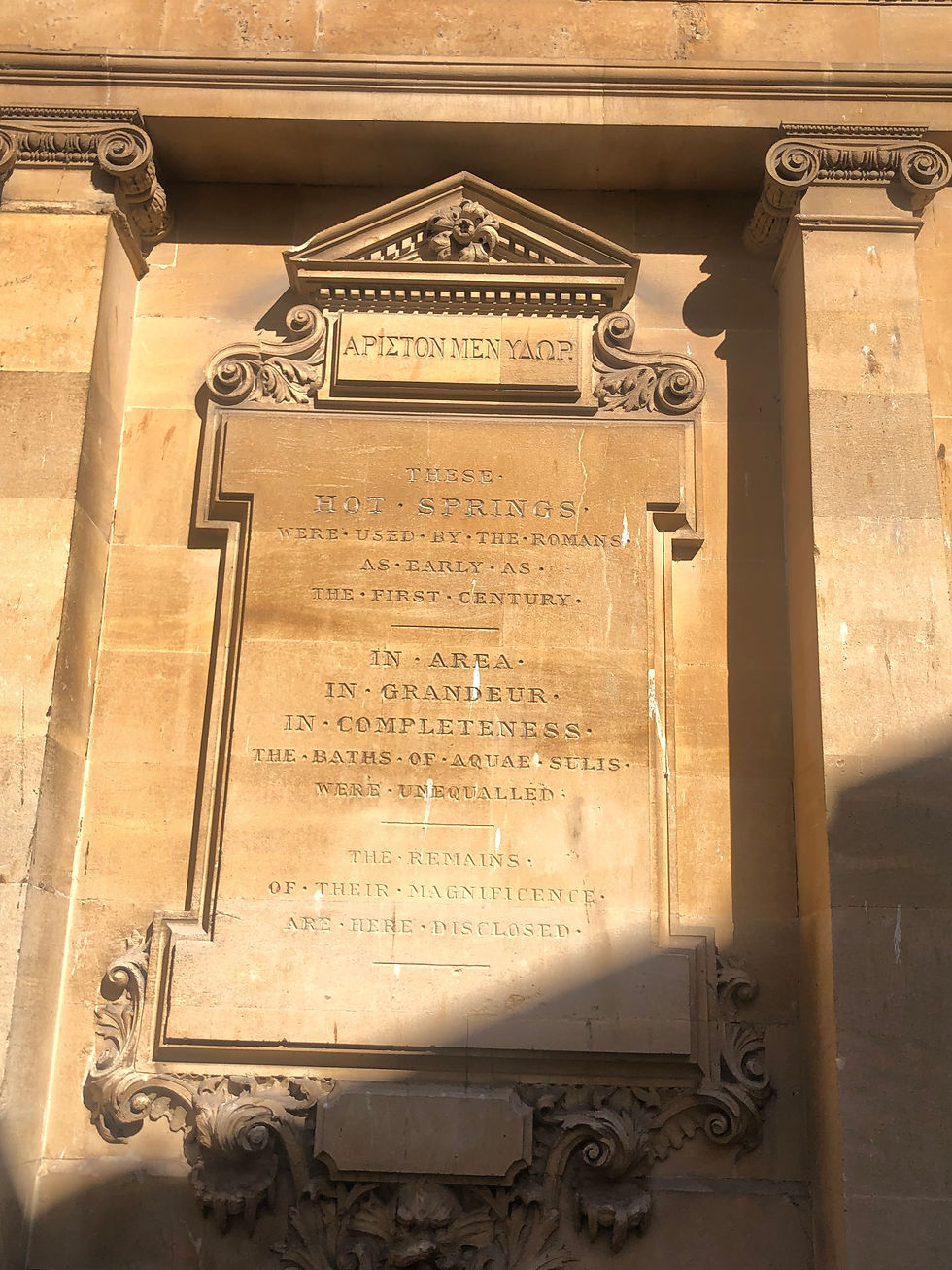
Three hot springs can be found beneath the city: the King’s Spring, supplying the Roman Baths, and the Hetling and Cross Springs, which can be bathed in at Thermae Bath Spa.
The water which bubbles up from the ground at Bath, fell as rain on the nearby Mendip Hills. It percolates down through limestone aquifers to a depth of between 2,700 m and 4,300 m where geothermal energy raises the water temperature to between 64 °C (147.2 °F) and 96 °C (204.8 °F). Under pressure, the heated water rises to the surface along fissures and faults in the limestone.


The Cross Bath - 01225 33 1234
The open-air thermal historic pool for bathing. stands, where the Celts revered their goddess Sul, thus it is recognized as an official sacred site
The surrounding structure of the pool was built, in the style of Robert Adam by Thomas Baldwin by 1784 and remodeled by John Palmer in 1789
and was restored during the 1990s by Donald Insall Associates
In the 16th to 18th c the baths were frequently visited by royalty, increasing their popularity
Other Bath Spa Buildings
Hot Bath Cross Spa Thermae Spa
The Jewish Connection

The Herschel Museum of Astronomy (at (on 19 New King Street,)
The museum which was inaugurated in 1981. is located in a town house that was formerly the home of William Herschel (1738 – 1822 ) a German-British astronomer and composer and his younger sister - fellow astronomer Caroline Herschel.(1750 –1848)
The "musical astronomers" from Hanover Germany as they are known lived in this modest town house from 1777-1782
Out of ten children to Isaak Herschel and his wife, Anna Ilse Moritzen, the family is widely considered to be of Jewish descent. His paternal ancestors are believed to have been Jewish immigrants from Moravia who converted to Protestantism in the 17th C so the family's children were raised as Lutherans.
William moved to England in 1757 as a musician and moved to Bath in 1766. becoming a noted musician and organist in Bath before focusing on astronomy .
His brother Alexander joined him in 1770 and the sister Caroline - the eighth child and fourth daughter , joined in 1772
Herschel constructed his first large telescope in 1774, after which he spent nine years carrying out sky surveys to investigate double stars.
On 13 March 1781 while making observations William made note of a new object in the constellation of Gemini. which after several weeks of verification and consultation with other astronomers, was confirmed to be a new planet, eventually given the name of Uranus. This was the first planet to be discovered since antiquity, and Herschel became famous overnight. Herschel pioneered the use of astronomical spectrophotometry, and made additional discoveries and contributions to Astronomy
Carolina's most significant contributions to astronomy were the discoveries of 5 comets, including the periodic comet 35P/Herschel–Rigollet, which bears her name
She took regular singing, English, and arithmetic lessons from her brother and collaborated with him on his astronomical work
She was the first woman to receive a salary as a scientist and the first woman in England to hold a government position, the first woman to publish scientific findings and an honorary Member of the Royal Astronomical Society
The Jewish community of Bath,
Part Of the Medieval Wall

Bath Jewish community has a history spanning from early, small medieval settlements, with evidence suggesting a presence in areas like Old Jewry, expelled in 1290 by Edward I , A modern congregation was established around 1700, serving families and individuals drawn to the city's health spas, often linked closely with Bristol’s larger Jewish community.

Moses Samuel ( 1795-1860) a British clockmaker, translator of Hebrew works, and writer. also formerly warden of the Great Synagogue in London who had retired to Bath, organized a congregation there, and on his death left money for building the Bath synagogue
The community subsequently dwindled, and regular services had ceased by 1874. The synagogue closed in 1910. Short-lived congregations have since been set up more than once.
By the 1960s there was no Jewish community in Bath, but in 2004 services were being revived under Progressive Jewish auspices.
Combe Down Jewish Burial Ground

Bath Jewish Burial Ground: Located at Combe Down, was established in 1815 and contains about 50, often bilingual (Hebrew/English), tombstones from 1815 up to the 20th c
Georgian Elegance

The square in the heart of Bath of Georgian houses is the first element in "the most important architectural sequence in Bath", which includes the Circus and the Royal Crescent.
All of the buildings which make up the square are Grade I listed.

The original development was undertaken by John Wood, the Elder, in the early 18th c. and paid for by Beau Nash.
He originally designed it as a social center with the building frontages following the rules of Palladian architecture , having the houses join in unison to give the impression that together they formed one large mansion, and then sub-let to individual builders to put up the rest of the buildings.
The square’s central garden provides a space for residents and visitors to celebrate, connect and engage
The obelisk in the center of the square was erected by Beau Nash in 1738 in honor of Frederick, Prince of Wales.


one of Bath's most iconic landmarks, an example of Georgian architecture, built between 1767 and 1775 and designed by the renowned architect John Wood, the Younger,
The Royal Crescent consists of 30 Grade I Listed terrace houses, arranged in a crescent shape around a perfect lawn overlooking Royal Victoria Park,

It features a a ha-ha, a ditch unique sunken wall originally designed to keep grazing animals away from the formal garden areas. Many notable people have either lived or stayed in the Royal Crescent since it was built over 250 years ago, and some are commemorated on special plaques attached to the relevant buildings. including the English comedian, actor and writer John Cleese, best known for Monty Python's Flying Circus and Fawlty Towers.
The Royal Crescent Hotel & Spa, at the center of the crescent, is made up of No. 16 and No.15.

Originally called King's Circus, it is a historic ring of large townhouses was designed 1754 by the architect John Wood, the Elder. who died and his son, John Wood, the Younger, completed the design in 1768.
William Pitt lived there and also
Gainsborough the painter
More recently, Hollywood actor Nicholas Cage also lived at The Circus.

Assembly Rooms
The Bath Assembly Rooms, designated as a Grade I listed building. were designed by John Wood, the Younger in 1769, and are a set of assembly rooms located in the heart of Bath. They provided a place for people to meet and enjoy daily entertainments including balls, concerts, teas and gambling. They are now open to the public as a visitor attraction.
When completed in 1771, they were described as 'the most noble and elegant of any in the kingdom.' ‘Polite society’ flocked to the Assembly Rooms, including the novelists Jane Austen and Charles Dickens, and the painter Thomas Gainsborough.
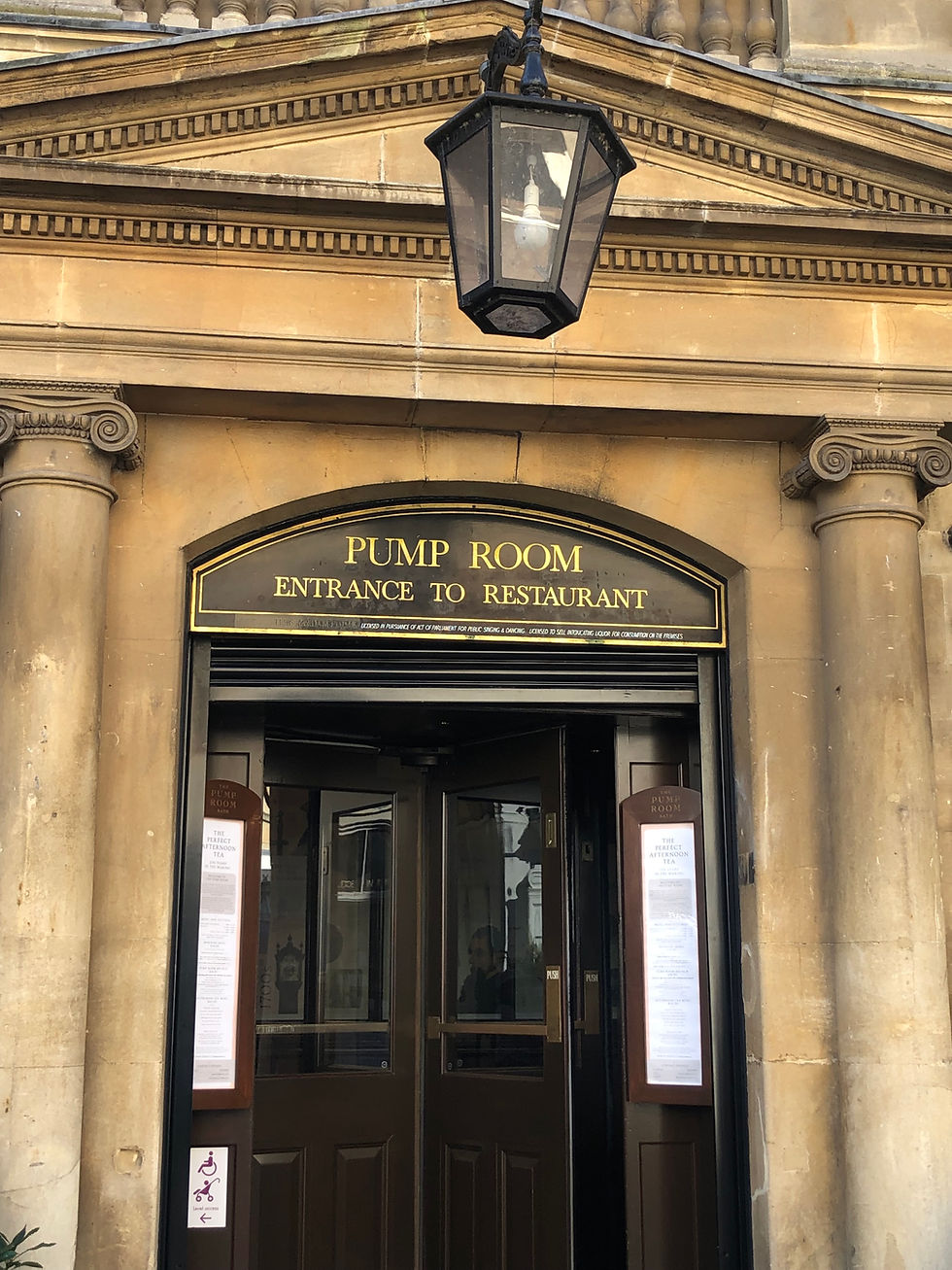
Pump Room
The historic building in the Abbey Churchyard, Bath, Somerset, England. is adjacent to the Roman Baths and is named because of water that is pumped into the room from the baths' hot springs.
Along with the Lower Assembly Rooms, it formed a complex where social activity was centered, and where visitors to the city gathered
The present building replaced an earlier one on the same site, designed by John Harvey at the request of Beau Nash, Bath's master of ceremonies, in 1706, before the discovery of Roman remains nearby. The Restaurant
Parade Gardens


Originally known as St James's Park, the garden was laid out in 1709 to accompany Assembly Rooms for Spa visitors, which were built by Thomas Harrison and conceived by Beau Nash
situated to the south of the Empire Hotel,
(built in 1901)

The historic indoor market is the oldest shopping venue in the city, For approximately 800 years, the Guildhall Market i has been selling goods to the local community. This market used to be huge, but due to redevelopment in the late 19th c, many of the stalls were lost and today a colourful group of twenty or so stallholders trade in this jewel of a building in the heart of the city, opposite the famous Pulteney Bridge.

The Friends Meeting House is an early 19th c Quaker meeting house, formerly designed in 1818 as a Freemasons’ Hall by William Wilkins in a Greek Revival style, located along York Street. In the 1820s-1840s a change of use was made from a Freemasons’ Hall to an events space and non-conformist chapel until it became the Bethesda Chapel in 1842.
Bath Friends building, which has been used as a Quaker Meeting House since 1868 took on a new life as a bookshop. Topping & Co a larget independent bookshop .
Roman remains have been unearthed from beneath the building.
Restaurants Sampled

Bar and Restaurant
90B Walcot St, 01225 530499
Set over two floors in an old bakery in Bath. Good Food
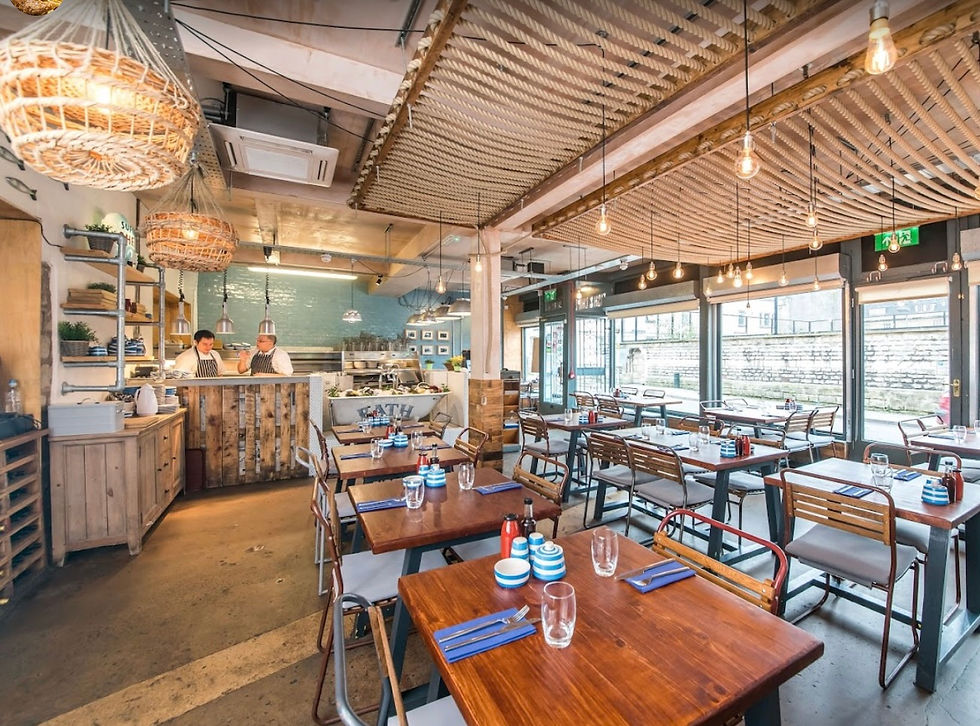
22 Monmouth Pl, 01225 420928
a fish and chip restaurant and seafood grill
Hotel Stayed At

Beau St, Bath BA1 1QY, 01225 358888
a modern boutique hotel with a thermal spring-fed spa , afternoon tea, and fine dining.
Named after the artist Thomas Gainsborough, it offers elegant 99 custom furnished guest rooms and suites subtly referencing period details combined with modern facilities.
The Gainsborough Bath Spa's unique selling point is its substantial spa. It’s the only hotel spa in Bath with access to the city's natural thermal waters.

The Gainsborough Bath Spa occupies two Grade II Listed buildings with distinguished Georgian and Victorian facades in the heart of the World Heritage Site.
The hotel's great breakfast as well as the High Tea were worth every bite

To be Continued....


Comments