
Travel:Nairobi to Arusha,Tanzania 07/05- 06/2026
Updated: Aug 16
Continuation of a trip that started on July 1/2026
Fly from SFO via Dubai > Nairobi > Drive Lake Nakuru (and Lodge) > Fly > Nairobi > Arusha (Serena Lodge) > Drive > Tarengeri Park > Drive > Lake Manyara (Serena Lodge) > Drive > Ngogorongoro Crater (Serena Lodge) > Drive Serengeti Central (Melia Lodge) > Drive > Serengeti Western Kirawira (Serena Tent Camp) > Fly back > Arusha > Fly back to Nairobi (Norfolk Hotel) >
Fly back via Dubai > SFO.
SFO to Nairobi - Lake Nakuru 07/02-05. (here)

It took almost 4 hours to drive back from Lake Nakuru National Park, Kenya to Nairobi, half of the time on bumpy unpaved roads, battling traffic congestion in a heavy foggy weather, , Thus I was relieved to take a flight to the next destination from Wilson Airport in Nairobi to - Arusha in Tanzania.

The smooth one hour flight (which saved 4.5 hours drive)
in the small SafariLink plane with only 10 passengers, from Wilson Airport was smooth and was handled masterfully by a male pilot and a women pilot.
The airline's ground service was excellent and efficient.
and the flight departed and landed on time,
However, once we landed another hardship was encountered..

Tanzanian entry visa fee was also required.
Apparently this visa application can also be arranged on- line, prior to arriving in the country.,
However fees can also be paid upon landing at the airport. The visa fee, per an Israeli passport holder is
half the price of USA passport holder.
As Leo's Israeli passport expired, his entry visa was paid in full with the US passport.
Luckily, again after some discussion, David's effective intervention, the Tanzanian authorities were willing to exempt Leo from the required Yellow Fever vaccination shoot.
Arriving at Arusha Airport

The allocated driver from Soles Company who picked us up at the airport, and transported us to the Serena lodge, spent only half a day in our company, showing around the city and driving us to David's childhood's house and school..
Safari Soles - Arusha Tanzania
+255 766322264 info@SafariSolestours.com.
bryson@safarisolestours.com - Director
Hawa@safarisolestours.com - sales (hawa)
Arusha City
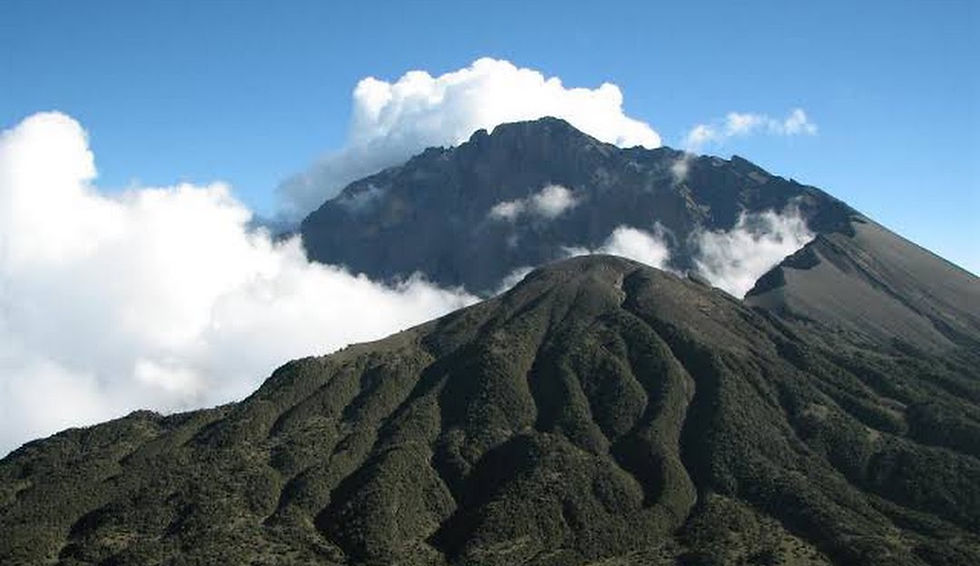
Located at the base of dormant stratovolcano Mt. Meru.-Tanzanian second-highest mountain (4,566 m) the verdant leafy Arusha City serves as a crucial gateway to safari destinations and to Africa's highest peak, (5,895m) of Mount Kilimanjaro,, lying some 100 km northeast.
To the west lies the famous Serengeti National Park,
The city is the capital of the Arusha Region. It has a population of about 630.000.
The current site of Arusha was first settled in the 1830s by the agro-pastoral Arusha Maasai (more on the Masa later)

Arusha was conquered by the Germans in 1896 after the murder of the first two missionaries who attempted to settle on nearby Mount Meru. A garrison /Fort was established with permanent presence in 1900, while displacing Africans from their ancestral lands.
The British took Arusha from the Germans in 1916 during World War I. banishing the Germans
During the 1920s, civilian administration was implemented, and missionaries from the US arrived,
British and Greek settlers reoccupied the former German farms, and the town had keys growing.
The railroad to Arusha in 1928-29 greatly increased commerce and population.

By the 1950s, Arusha became a westernized little town with Greek community, several Germans predating World War I, and some German Jewish refugees post-dating World War II
From fewer than 2,000 residents in 1940, growth during World War II increased and by 1948, the population had increased to more than 5,000.
A partial census from 1962 reports a population of about 8000, of whom 1,084 were Europeans, 3,153 were Asians, and 3,560 native Africans
In mid 1960th also the Naveh family arrived in the area

Arusha has been a crucial city in the history of modern Tanzania. In 1961 official documents ceding independence to than Tanganyika were signed by the UK at Arusha .
The Arusha Declaration was signed in 1967 in Arusha.
In 1994, the UN Security Council decided by its Resolution 955 of 1994 that Arusha should host the ad hoc International Criminal Tribunal for Rwanda.
The establishment of the tribunal with its foreign employees has influenced the local economy of the city. and till today it is home to a number of notable intergovernmental organisations..
Natural Green Leafy Arusha
Man Made Arusha

It is such a shame that the original beautiful verdant natural landscape has been polluted by most colorful slums' sprawl


David's Family Personal Connection to Arusha
David's late father - Prof. Zeev Naveh - a renown Landscape Ecologist, and an expert on pasturing, was sent in the mid 1960th, by the Israeli Gov.Foreign Office to Arusha, as to educate the Masai people of the region, on pastoral and agricultural alternatives, as their customary migrations practices, cased at the time, boarders' feuds.
While most other peoples in 140 tribes in Tanzania are anthropology Negroid. the Masai tribe is an anthropologically a NiloHamitic tribe. known to be tall with elongated features . They have always been recognized as highly intelligent,
due to, speculatively, their high protein- Yoghurt, blood and meat - die , in contrast to the corn based Magali which was the staple food in other tribes of Tanzania.
Transforming from Boyhood to Manhood, a Masai at age 14-20 was required to kill a lion with a spear, followed by two years of “ military training “ . (this practice is no more) Until Uhuru - Independence in 1961 these once over 250,000 cattle herders ( now 430,000 to 1,000,000) terrorized in the past, the farmers in East Africa, seeking green pastures. The Masai were feared and admired . After Uhuru they were not allowed to plunder their way to greener pastures while destroying farms, thus were at risk of extinction. David’s father - an expert on pasture, grazing , and fires was invited by Julius Kambarage Nyerere- the first President of Tanzania, to teach the Masai how to adjust to another way of life .
Prof. Zev Naveh, was nicknamed the ‘Israeli Pyromaniac’ as he was the firsts to initiated small controlled fires in the holiest of holy in California - the Sequia forests, while in the depths of Forestry Faculty in UC Berkeley in 1958 , As an expert on controlled fire, known also as prescribed burns, which safely clear dangerous fuel loads, improve wildlife habitats, and restore ecosystem, David's father was a natural best choice for the task.

After a 4 days drive on unpaved muddy roads, in the family's new Citroen, from tropical, hot humid Dar es Salaam- a major city and commercial port on Tanzania’s Indian Ocean coast, 630 Km away, the Naveh family of origin, arrived at its ex-colonial house in
(Today, Tengeru has become a suburb of Arusha)
Beginning in 1942 and continuing after World War II, a camp for displaced persons from central and eastern Europe (site of the largest Polish refugee in Africa during the war) was established at Tengeru , just south of Lake Duluti..
At its height the camp housed over 4,000 people, The dairy and beef cattle farm that was run by the camp's internees was taken over in 1952 by the Ministry of Agriculture and became the Tengeru Horticultural Research and Training Institute (HORTI) with which David Father was affiliated.
At 1,17 m above sea level altitude, Tengeru is a cool and dry environment, conducive for comfortable human and horticultural habitat.
David’s father, was also a pioneer and co-founder of Kibutz Matsuba, Israel, who throughout his life suffered from the after effects of 1930’s malaria and other diseases, In Arusha he identified an elderly German physician who was General Rommel's personal doctor and who took care of of David's father for 4 years.
Field Marshal Erwin Rommel was one of German's most popular generals during World War II, He was appointed the commander of German troops (the Afrika Korps) in North Africa. However, after he was implicated in a plot to overthrow Hitler, Rommel took his life in 1944.

Only familiar with the 60m2 house (du mishpachti) , in Kiryat Amal - Tivon Israel, the large African property in Tengeru Arusha with a fireplace , garage, small dwelling for the family of the service Boy’s, as well as with a manicured lawn and roundabout car drive, seemed like a palace which
David was smitten by..
The next day after the family's arrival in Tengeru, David's parents enrolled him (then 10 years old) and his sister Smadar (then 6 years old) at the Arusha School where they studied for the next 4 years, under strict British discipline, which, strangely enough, failed to rub into David's core...
David physically ran away when after some mischief he was supposed to be punished with “ six of the best “ - six flagging on his butt with a “ takee” - sport shoe. Teachers never ever hit children in Israel.
On a visit to Tanzania in 2005, David wanted to show me the house and school of his childhood .
It was the first time after over 50 years since his childhood that he returned to Arusha .
We arrived at the property on our own, with a rented Jeep, and David drove from memory, right into what was the front lawn of the property. There where, now 3 families residing, at the same space with cows roaming in the back garden .
On this trip of 2026 while taking Leo- our older grandchild to show him David childhood's house and school , David, again located effortlessly, from memory those places, that were so dear to him.
However, sadly, neither the house nor the school, seemed, so spacious, spectacular or admirable. to him, any longer .
Arusha School

The main and most well-known colonial-era school in Arusha has been the Arusha School. Established in 1934 by the British colonial administration, it was originally founded as a private boarding and day school for European children.
Historically, there were a few localized schools for European children in the Northern Tanganyika region (including the German-built school in nearby Oldeani). However, the Arusha School grew to become the most prominent, and eventually becoming the country's first English-medium learning institution
Following Tanzania's independence in 1961 and the Arusha Declaration in 1967, the school system was nationalized. Today, Arusha School operates as a state-owned primary school

Though we visited this famous colonial school years ago on a previous trip, it was important for David to expose Leo
to this historical institution, which David attended and studied in when residing with his family in Tengaru. in the mid 1960th
What was once a state of the art colonial best educational boarding facility, looks now a days, so
run down and decrepit, that even the enchanting tortoise (over 200 years old) that had, already roamed around the premises during David's schooling, 60 years ago, looked in a better preserved shape, than the depleted structures, . and grounds of the school.
David was stunned. The immaculate Arusha school of his childhood, was set in a lush garden with several colonial buildings to accommodate 300 boarding school pupils and 50 day pupils, such as himself.
The school had then a large swimming pool with low and high jumping board, tennis courts , hockey and rugby fields and an horse stable . Now all of these are long gone. Yet the giant tortoise - "Sir Alex" was still roaming around. We saw him in 2005 and again now with Leo in 2026. It was sad for David to see this really great school with its buildings and gardens so run down,, although, we were told the institution is still considered the top school in Arusha.
Old "Sir Alex" Roaming the School Yard

The Giant Tortoise which the school kids used to play with, when out in the school yard, was there already when David studied at the school, in the mid 1960th as well as when we visited the school once before, years ago
Apparently this wonderful creature. already roamed around the school's grounds since about the 1920th
The 200-year tortoise -old Sir Alex was imported to Arusha along with three other tortoises from Australia in early 1920s when the primary school was not even in place. Its image is also on display at the school's gate entrance
The Lodge We Stayed In

Arusha Serena Hotel, Resort & Spa
P.O. Box 2551, Arusha, Tanzania +255 682 310 007
Roughly 8 miles from Arusha Airport
Once a 1920th colonial-era coffee farm, and a lakeside retreat, Arusha Serena Hotel nestles on the slopes of Mount Meru beside the volcanic crater lake- Lake Duluti, along Tengeru Road in Arusha,
It is surrounded by an enchanting most natural verdant tranquil landscape. 42 cottage-style rooms clustered around stone-built reception area , are set among manicured lawns and blooming..
Food at the hotel is disappointingly very mediocre.
The Lush Hotel's Grounds
The hotels serves as a gateway to Tanzania's iconic Northern Safari Circuit
Lake Duluti known for its serene environment and rich biodiversity
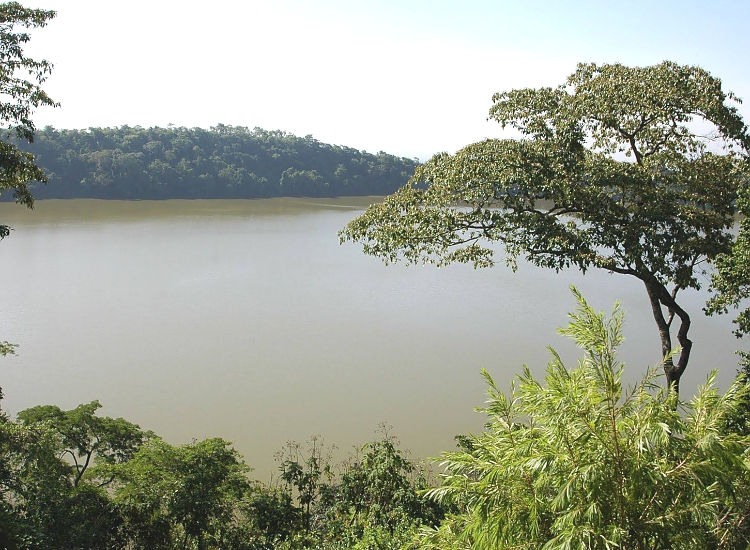
Originally we were due to stay 2 nights at this beautiful Serena lodge. However as not to drive twice back and forth to the Parks and back to Arusha, ( 3 hours each way) it was decided instead, to stay the second night at Lake Maniara Serena Lodge on the way to Ngorngoro. Crater.
TO BE CONTINUED....


Comments