
Travel:Arusha to Tarengeri Park and Lake Manyara. Tanzania. 07/06-07/2026
Updated: Aug 16
Continuation of a trip that started on July 1/2026
Fly from SFO via Dubai > Nairobi > Drive Lake Nakuru (and Lodge) > Fly > Nairobi > Arusha (Serena Lodge) > Drive > Tarengeri Park > Drive > Lake Manyara (Serena Lodge) > Drive > Ngorongoro Crater (Serena Lodge) > Drive Serengeti Central (Melia Lodge) > Drive > Serengeti Western Kirawira (Serena Tent Camp) > Fly back > Arusha > Fly back to Nairobi (Norfolk Hotel) >
Fly back via Dubai > SFO.
SFO to Nairobi Kenya - Lake Nakuru 07/02-05. (here)
Nairobi to Arusha, Tanzania 07/05- 06 (here)
It seemed that our "glitch full" travel experience, of the past few days since landing, finally subsided as of this morning.
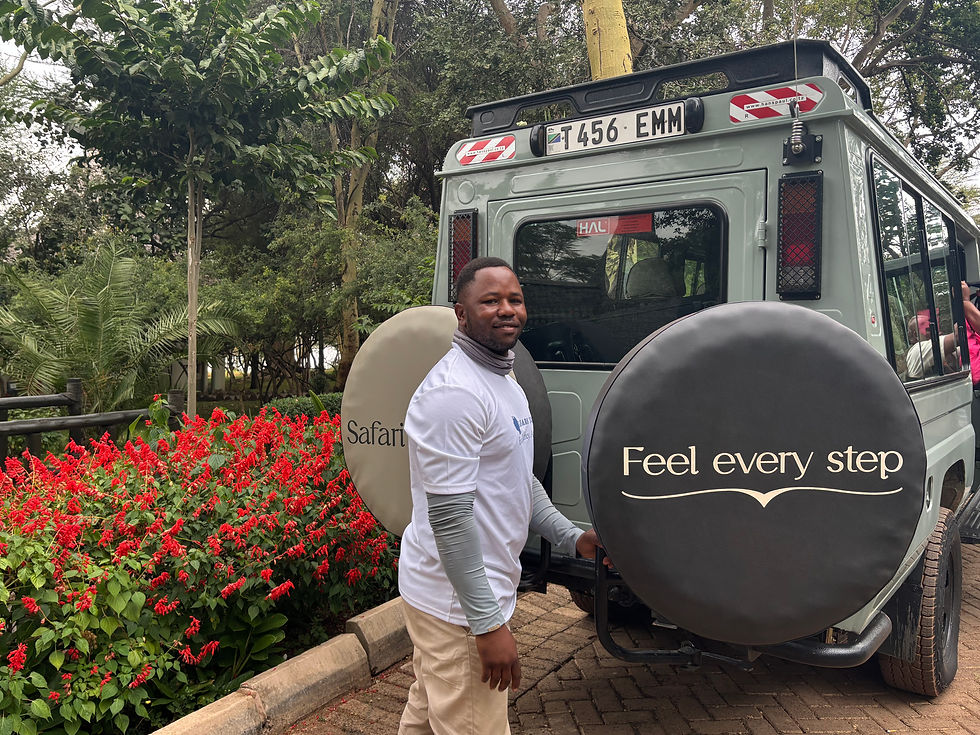
Silas Mathayo of the Masai Dollel group
+255 765 741 497 smollel88@gmail.com
the Safari Driver Guide who works for: Safari Soles company, picked us up, from the Arusha Serena Lodge, with a brand new Land Cruiser, for the day's Safari Drive
Silas showed up sharp on time, and seemed very promising.
And indeed, a true autodidact Masai versed in zoology anthropology and eco-systems, he has these African parks in his DNA, He was the, best ever friendliest and knowledgeable experienced guide we lucked-out to have.
His even-kill personality, innate wisdom and kindness won our hearts and that of our grandchild as well.

Safari Soles - Arusha Tanzania
+255 766322264 info@SafariSolestours.com.
bryson@safarisolestours.com - Director
Hawa@safarisolestours.com - sales (hawa)
This is a fantastic very responsive Safari planning company with great staff, which we highly recommend
Brayson- the owner of Soles and Hawa the company's accountant were courteous and very helpful
Based on Silas' wise advise we shorten the second night stay at the Arusha Serena Lodge and decided to continue
from Tarangire National Park to Lake Manyara . and to lodge there, instead of driving twice there and back to Arusha, as the plan was to continue the following day to the Ngorongoro Crater.
The Drive from Arusha to Tarangire National Park took about an hour and a half and another half an hour to Lake Manyara

The Scenery on the way - Entering Masai Land

The Maasai are a semi-nomadic, Nilotic ethnic group native to Kenya and northern Tanzania. Known globally for their vibrant red attire (shúkàs), intricate bead-work, and jumping dance (adumu), they rely primarily on herding cattle, sheep, and goats, which serve as a vital source of wealth, milk, meat, and blood.
Maasai villages (manyattas) consist of small, loaf-shaped mud-and-cow-dung houses built by women, arranged in a circular formation around a central pen to protect their livestock from predators at night
They are monotheistic, believing in a single God named Engai, and revere their Laibon (spiritual leaders) who act as healers, rainmakers, and advisors. Circumcision is practiced
Today, many Maasai live near famous wildlife reserves. They face significant challenges—such as land loss from conservation fencing, privatization, and drought, and are struggling to balance their rich ancestral pastoral traditions with modern education, tourism, and community-based conservation. (more in next posts)
Circumcised Masai young adults in the related Rite traditional Black Clothing

The Maasai practice circumcision, known as emorata, as a major rite of passage to move young people from childhood into adulthood. Boys are usually initiated between the ages of 12 and 20 during cyclical age-set ceremonies held every several years, The surgery is done using a sharp knife without medical anesthesia,. Girls traditionally undergo the ritual around puberty before marriage

Just Before entering the Park

Tarangire National Park


Tarangire National Park ( 027 297 0404) which was established in 1970 to protect the vast savannas, acacia woodlands, seasonal wetlands, and river ecosystems of northern Tanzania, is set in Tanzania's Manyara Region..
in the meadows of Masai Steppe to the southeast and the lakes of the Rift Valley to the north and west.
Ranking as the 6th largest National Park in Tanzania and covering an area of 2,600 square km, it is most popular for its large elephant herds and mini-wildlife migration that takes place during the dry season which sees about 250,000 animals enter the park.
The name of the park originates from the Tarangire River that crosses the park. and is the primary source of fresh water for wild animals in the Tarangire Ecosystem during the annual dry season
The park's landscape is composed of granitic ridges, river valley, and swamps. Vegetation is a mix of Acacia woodland, Combretum bush willow woodland, seasonally flooded grassland, and enchanting Adansonia known as Baobabs trees.
It is less crowded than many of its neighboring parks
and the scenery of the partly dry river flow and the Baobabs trees is breathtaking. On the day we visited we saw few families of elephants gathered by water holes and dipping in mud bath.
Baobabs Trees.


Tarangire River


Lake Manyara National Park

Lake Manyara National Park one of Tanzania's best national parks, is located between Lake Manyara and the Great Rift Valley in the Arusha and Manyara Regions. and its incredible variety of distinct ecosystems packed into a small area. covers an area of 325 km² including about 230 km² lake surface. The park has a variety of diverse habitats and wildlife and is best known for its rare tree-climbing lions,(although we have seen non) and massive flocks of pink flamingos, The park also supports one of the highest concentrations of baboons found anywhere in the world
View of Lake Manyara


Lake Manyara (also known as Lake Moya) is a shallow, alkaline lake and is the seventh-largest lake of Tanzania by surface area, at 470-square-kilometre.
It is included within Lake Manyara National Park and it is part of the Lake Manyara Biosphere Reserve, established in 1981 by UNESCO as part of its Man and the Biosphere Programme
The lake is known for flocks of thousands flamingos that feed along the edge of the lake in the Wet Season.
Since our visit was in the Dry season, we didn't see any..
The views of the lake and the landscape surroundings are absolutely stunning.
Mto wa Mbu - "Mosquito River"


Mto wa Mbu - the colorful farming village we passed through, located prior to arriving at Lake Manyara Lodge and right at the northern entrance of the Park, serves as a primary cultural stopover and safari hub in Northern Tanzania. it is home to around 18,000 people.
Known as a vibrant "Mosquito River" in Swahili, it uniquely features representatives from over 120 different Tanzanian tribes. Many safari itineraries stop here for curated experiences like visiting local banana plantations, seeing traditional artisan workshops, or visiting nearby authentic Maasai homesteads (bomas) before heading up

One Night at Lake Manyara Serena Safari Lodge

Mto wa Mbu Escarpment, Northern
The authentic African-styled safari lodge. is situated on Tanzania's towering Mto wa Mbu escarpment with a remarkable backdrop right next to Lake Manyara National Park. offering panoramic views of Lake Manyara
Traditional 67 bedrooms ‘rondavel' cottages are perched along the edge of the cliff.
It is a great lodge and the lush vegetation and views of the lake below are truly inspiring.

African Art Markets

Not far from the lodge, about 5 km going south, is located on the road between Lake Manyaraa and the Ngorongoro Crater, an huge fancy upscale African Art Market center named Safari Land or African Galleria (near the town of Karatu,)
It offers in its sprawl of indigenous spacious stores, showroom and exclusive boutique counters, a rich collection of tribal handcrafted artifacts and ebony wood carvings. local wildlife paintings, statues and masks, traditional bronze art and Tanzanite stone jewelry and all kind of other artisan-crafted souvenirs,, and trinkets geared for tourist and being charged tourist prices.
Open daily from 7:30 AM to 5:30 PM (+255 786 026 461)
Further down the road, another 2 km away from this upscale center, a more modest authentic local African Art Market is selling the same artifacts, but the prices are much more reasonable

We passed by theses 2 markets early morning on the way to Ngorongoro Crater and stopped a bit to browse.
The early morning hour and the volume of artifacts , though all impressively beautiful, yet much more costly than we remember from previous visits, was very over whelming and only curbed my appetite. for shopping..
TO BE CONTINUED....


Comments