
Travel: Chiloe Island, Lake Region Chile, Nov 11 –14/2025
A continuation of a trip to Antarctica and other parts of Chile which includes posts from Oct 22nd -Nov23rd

The rainy grey weather, though relatively warm, helped us depart charming Puerto Varas, were we spent 3 days.
This most ambiance fulled European town of the Lake Region, which offers beautiful lake's and Volcano's scenery. as well Germanic architecture, set against the backdrop of most verdant surrounding, filled our hearts with owe.
Recommended Chole, is a beloved vacationing island by the Chileans, yet still largely undiscovered by international travelers., though it is located in the Lake district, not far away from Puerto Varas/Puerto Montt

It took 1.5 hours to drive to the Ferry mainland departure point, and another 20 minutes crossing with our loaded rental car, via Chacao Channel- the waterway

The ferry crossing between Chole Island and mainland, via the 40 km long and 4 km wide, Chacao Channel, connects the mainland town of Pargua with the town of Chacao on Chiloé Island,
Payment for the crossing is done on the Ferry which departs every 20 minutes
from 06:50 until 22:40, then every 1 or 2 hrs.

The sea channel separates the northern tip of Chiloé Island from the mainland and connects the Pacific Ocean and the Gulf of Ancud
A bridge has been under construction to cross the channel, is expected to be completed in the future (2028 ?), It will further connect the island to the mainland

Arriving at Chiloe Island
It took anther 1.5 hours drive, to reach Castro - the main town on the Island, in the vicinity where the hotel we stated was located.
Pastoral verdant landscape with swats of farmland against bodies of water, was the splendid scenery along the way.

The traditional and slow paced island of northern Patagonia is the main island in the southern Chiloe archipelago off the west coast, in the Pacific Ocean.
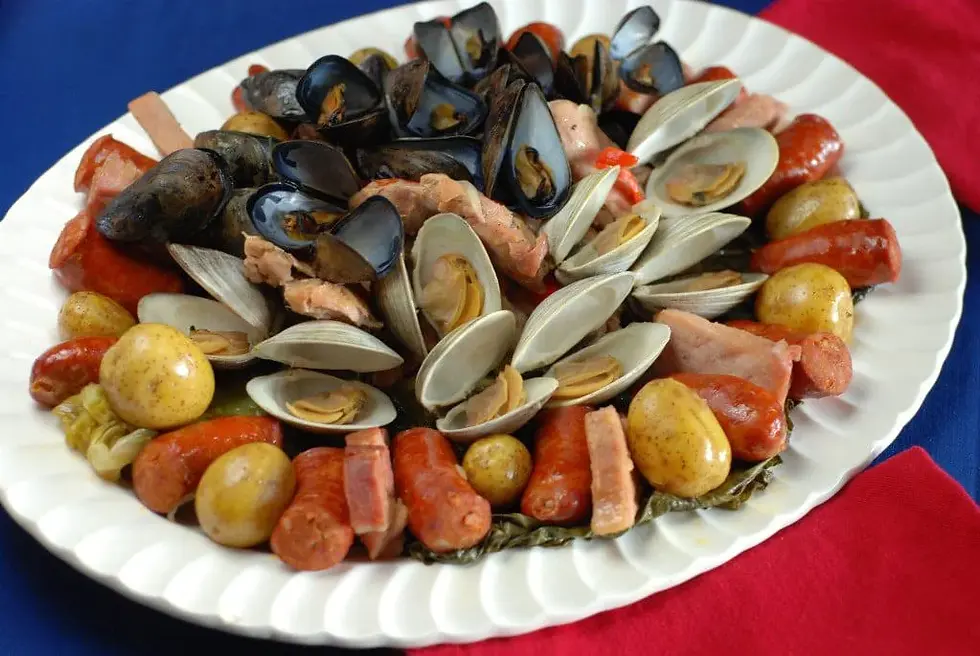
It is known as the land of myths, legends, traditions, and unparalleled gastronomy.
Food is home-grown, and the fish and other sea food are freshly caught
The traditional Curanto dish which includes seafood , and other ingredients such as the Chiloé potato, is a traditional Chilote method of cooking using heated rocks buried in an earth oven pit that is covered with pangue leaves and turf.

The island's pastoral cinematographic northeastern landscapes reminded me that of Tuscany -Italy.. consisting of verdant rolling hills, pasture mosaics forested land swats and cultivated farm fields.
It is known for picturesque palafitos -colorful stilt houses built on the water, and its iconic 70 wooden churches built by Jesuit missionaries in the 17th and 18th c, of which 16 were declared World Heritage Sites by UNESCO .
The architecture blends of European Jesuit culture, fused with local indigenous skills, particularly those of boat-building, create a distinct style that reflects a unique fusion of cultures


Visits to Ancud Regional Museum, or/and Tantauco National Parks as well as Kayaking the many bays and hidden cove, hiking wild coasts, rich forests and wetlands, or great wildlife watching, observing where blue whales gather, in northwest coast, are activities to be concern when touring the island. Also Islotes de Puñihuil, which is a Natural Heritage Site, were a Magellanic and Humboldt penguin breeding ground is, shouldn't be missed.
Driving toward Castro
The town is quint from far, and far from quint ...the town's center plaza is far from charming and the shopping streets around seems very depleted and is not pleasant to walk around. Castro is Chile's third oldest city in continuous existence,
Castro is the capital of the Chiloé Province in the Los Lagos Region on the eastern coast of central Chiloé. Established in 1567 by Martín Ruiz de Gamboa to conquer Chiloé Island, ,
The city was destroyed by an earthquake in 1837 and had only 1,243 inhabitants in 1907.
and now about 15,000
Colorful stilt houses built on the water,
On the way to the Hotel


Hotel Refugia Chiloe -Tierra Chiloe
This fantastic luxury hotel and spa is only open only seasonally from Oct to May. It can be booked as a full package with 3 meals and activities, or accommodation with Breakfast only
It offers stunning views, great service and good culinary standards.
The original owner/founder of the Refugia Chiloe Hotel - Miguel Purcell sold the property to the Australian KSL/Baillies Lodges, and then bought the property back.
Purcell family, Chilean-Americans from Santiago, with a long history at the very top of the Chilean hospitality industry, dedicated to conservation, and one of their strategic pillars for Refugia Chiloé is the conservation of Chiloé island, its culture, and community.
The family has been the owner/operators of Ski Portillo in Chile ever since Henry Purcell arrived in Chile in 1961, and they are the founders and developers of
Tierra Hotels - an intimate collection of luxury hotels in remote diverse beautiful regions, (there is also one on Atacama and another in Patagonia).
In 2022, the Purcells sold their majority interest in Tierra Hotels to KSL/Baillies Lodges, but in October 2024, they bought back 100% control of Tierra Chiloé.

Scenery around the Refugia's surrounding

Refugia's stunning setting within Chiloé archipelago, nests by Pullao Bay of the Pacific Ocean's fjord., which also serves as an extensive ideal nursery for Sea Food Farming., floating on the bay's tranquil water.
The secluded hotel, a bit too secluded for us, as well as too pricey, offers an oasis of beauty, panoramic views, inland sea, and low rolling hills all embedded in paradise tranquility .
The striking hotel wood-clad craftsmanship architecture, its local authenticity. the inside and out casual interior design, its expansive windows overlooking the sea, and from which the volcanoes of the Andes mountain range. can be seen at distance,
make the place a unique gem.
Excursions and wellness activities on land and sea are being offered daily at the hotel
Morning Walk via the Hotel's marked Path


Sea Food Farming at the Fjord

Scenery of the Hotel's Surrounding


Around Castro

Besides the main town Castro on Chiole island, the Seaport town of Dalcahuea which is only 25 minutes drive north from Castro and 15 minutes away from the Refugia hotel, is worth visiting
It is much smaller, yet was much more to our liking and is pleasant to walk around
In the island archipelago east of Castro there are numerous islands connected by ferries. 10 minutes Ferry crossing with the car, from Dalcahue, lends on Quinchao island- an island off an island,
Crossing from Dalcahuea t0 Quinchao
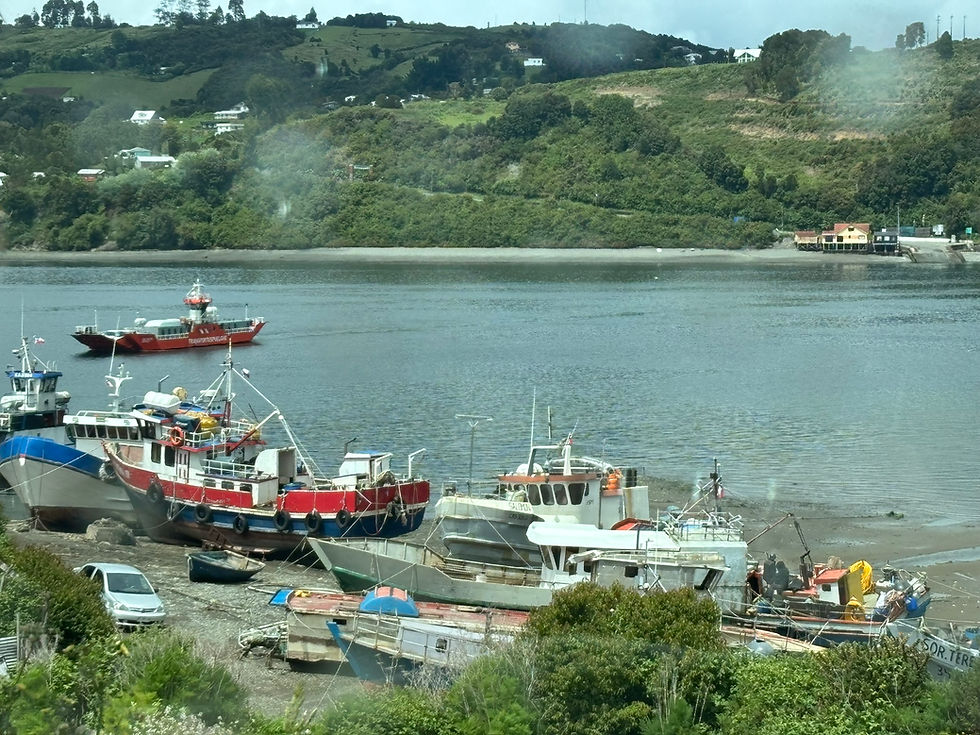
Dalcahue
At the main Shopping Street of Dalcahue
David set his heart on having lam-chops for dinner, after encountering so many lams roaming freely throughout the green meadow surrounding.
Apparently, disappointingly we realized, that lam dishes were missing from almost all local restaurants, as it is not the season, and it is too expansive for a restaurant to serve.
After thorough research, David discovered this one restaurant in Dalcahue which agreed to serve lam if per-order.ed. So David did, and it was specifically
cooked and served for us, when being the only ones dinning at the place
Scenery from the Restaurant in Dalcahue


La Punte de Cerro Restaurant
It indeed offered an exceptional dining experience, and generous portions of delicious traditional Chiloe food.
It cooked so much lam for us that we hardly could finish, and refrained from ordering it for the rest of our stay in Chile
Even more then the Food I enjoyed the splendid Views

The family owned very unassuming local restaurant, is located on an hill off the main toad with breathtaking views of Dalcahue town and the Bay.
As we were the only ones dinning in the restaurant during lunch time, several family member kept hoovering over us suggesting many local dishes
Around the Restaurant
On Quinchao Island
Situated on the Gulf of Ancud - a large body of water that is peppered by many small habitable islands and islets. which separates the Chiloé Island from the mainland of Chile. is this very lush green island off Island set


Quinchao beautiful scenery of the ocean, its most verdant hilly pastoral surrounding, sheep's farms and few small authentic villages and historical wooden churches, is a nice island to visit. The island is a significant stop on pilgrimage routes, particularly for the feast day of Our Lady of Grace.
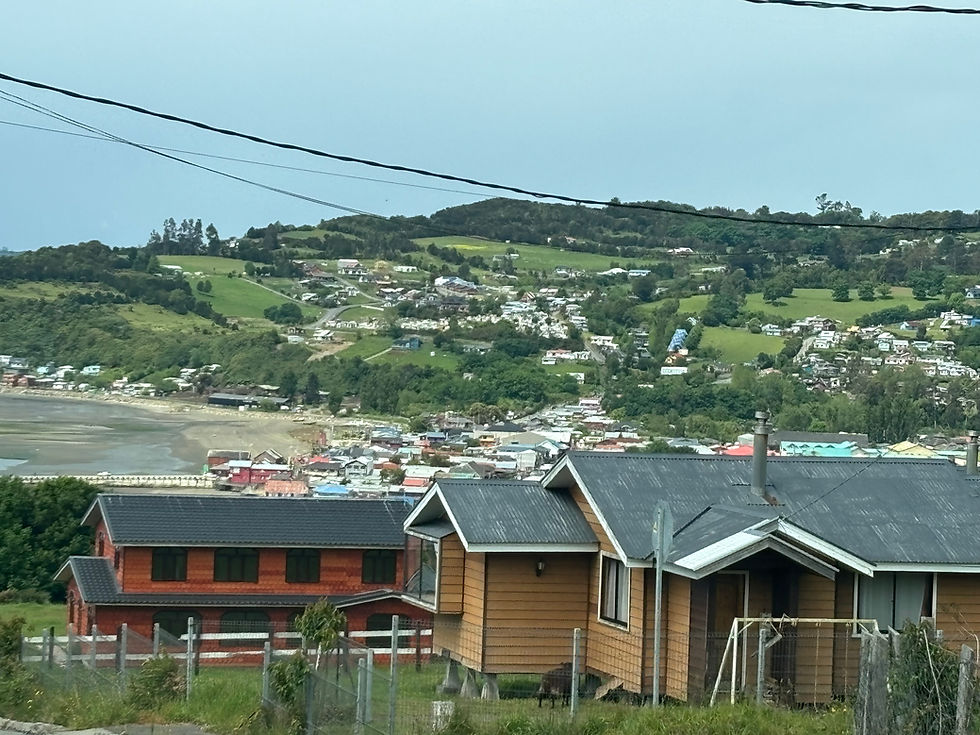
The 2 Villages we toured on the island were:

Curaco de Velez, is located on the western side of Quinchao Island
Curaco is proud of its association with several famous Chilean sailors

Achao

Achao is also a village .and a the capital of the commune of Quinchao island of the same name. It is built on a flat area surrounded by hills and facing a shallow sandy beach. Opposite the town are the islands of Llingua and Linlín
In front of the Achao plaza is the Church of Santa María de Loreto, Achao
On the way back to the ferry
Exploring Rilan Peninsula on Chiloe Mainland


During exploration of Chiloe 's main land, on the same Rilan peninsula were Castro and Refugia tiera chiloe hotel are set, overlooking the Pullao Bay, we stumble upon 2 other secluded hotels They are closer to rural Rilan ,where one of the Unesco heritage churches is located.

These 2 hotels are set in likewise beautiful setting, with an unpaved road leading to them, though they are much more modest, rustic, and more affordable, about half the price of the Refugia Chiloa, yet still overpriced for what is being offered

Facing Pullao Bay

Facing The town of Castro
56 97300 7056
More wooden crafted churches on the peninsula
Port of Ancod

Penguins on Chiloe's Nortwestern Pacific Coast

On our last day in Chiloe, (Nov 14th) and before the ferry's crossing from Chacao back to the Chilean main land, we stopped to visit the enchanting most northwestern corner of Chiloe
known as Punihuil peninsula .
The beautiful natural landscape on this rural pastoral coast is mildly populated with agrarian farm plots, full of sheep , pigs, cows and horses,


This is also where a Penguins breeding colony, around 27 km southwest of the Gulf of Ancud. is found
It is known as:
located at at the end point beach
of the peninsula's coast
The Beach from where the small boat ride departs to the islets


The colony is found on three islets
This is the only place in the world where Humboldt and Magellanic penguins nest side by side. It was declared a national monument in 1999.
We unfortunately encountered only few of only Magellanic ones.
The Rock Formation at the Beach

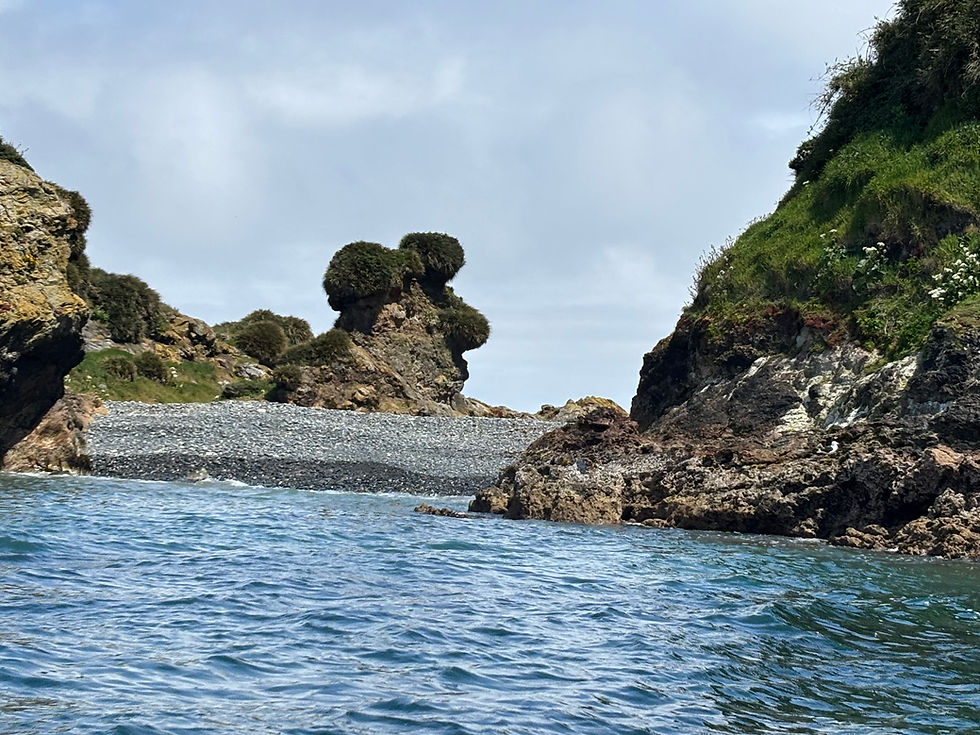
No need to arrange a tour in advance,
for the 30 minutes boat tour ride.
Driving to Punihuil all the way on the one paved road until it ends at the quint beach a got us there.
Three restaurants and several small motor boats offer services to the arriving bus loaded tourists and incidental visitors like us,
There are more birds seen than Penguins the afternoon we visited

Tours to the colony are by these small boat: It is not permitted to land on the colony, which is spread out on the several enchanting bulging rocks islets at sea
Within the half an our boat tour we observed only few Magellanic penguins and some birds like cormorants, pelicans, kelp geese
Back via Ancud and crossing Chacao Channel to main land
Bye Bye Chiloe

Arriving back at Puerto Montt

To be Continued...


Comments